
Vision Plan

Vision Plan

Vision Plan

Vision Plan

Play Video
How Florida is Making AAM Services a Reality?

AAM is the future of transportation, and Florida is taking action to become the first state in the nation to have commercial AAM services. FDOT has taken a national leadership role by advancing policies, planning efforts, and infrastructure frameworks that position cities and towns across Florida to support this new mode of travel. This will give residents and visitors more ways to travel, connect, and access essential services quickly and efficiently.

FDOT is committed to working with the AAM industry and is investing in key infrastructure like vertiports and testing centers to support it. With appropriate regulations, a focus on innovation, and the development of a strong and ready workforce, Florida is well-positioned to help AAM companies launch and grow profitable businesses.

Comprehensive Business Plan

Florida has built one of the nation’s most complete frameworks for implementing Advanced Air Mobility, and the state has already moved from planning and onto real-world implementation.

Florida’s strategy for executing AAM brings together all the essential pieces: strong legislative support, completed statewide planning, and a connected aerial network designed to support both passenger and cargo AAM services.

FDOT’s AAM Business Plan outlines Florida’s strategy for integrating next‑generation air travel into the state’s transportation network. The plan guides statewide coordination, safety planning, and infrastructure development to ensure AAM becomes a practical option for moving people and goods efficiently. The plan positions Florida as a national leader in this emerging technology while expanding transportation choices and supporting economic growth.

FDOT is also completing an Operational Plan for AAM. This plan provides the roadmap for how an Advanced Air Mobility site will safely and efficiently support next‑generation aircraft and flight activities. It outlines how a facility will operate day‑to‑day, including procedures, roles, safety practices, and coordination efforts. Its purpose is to create a well‑organized, future‑ready environment where new technologies can be tested, refined, and integrated into the broader transportation system.

Creating Highways in the Sky

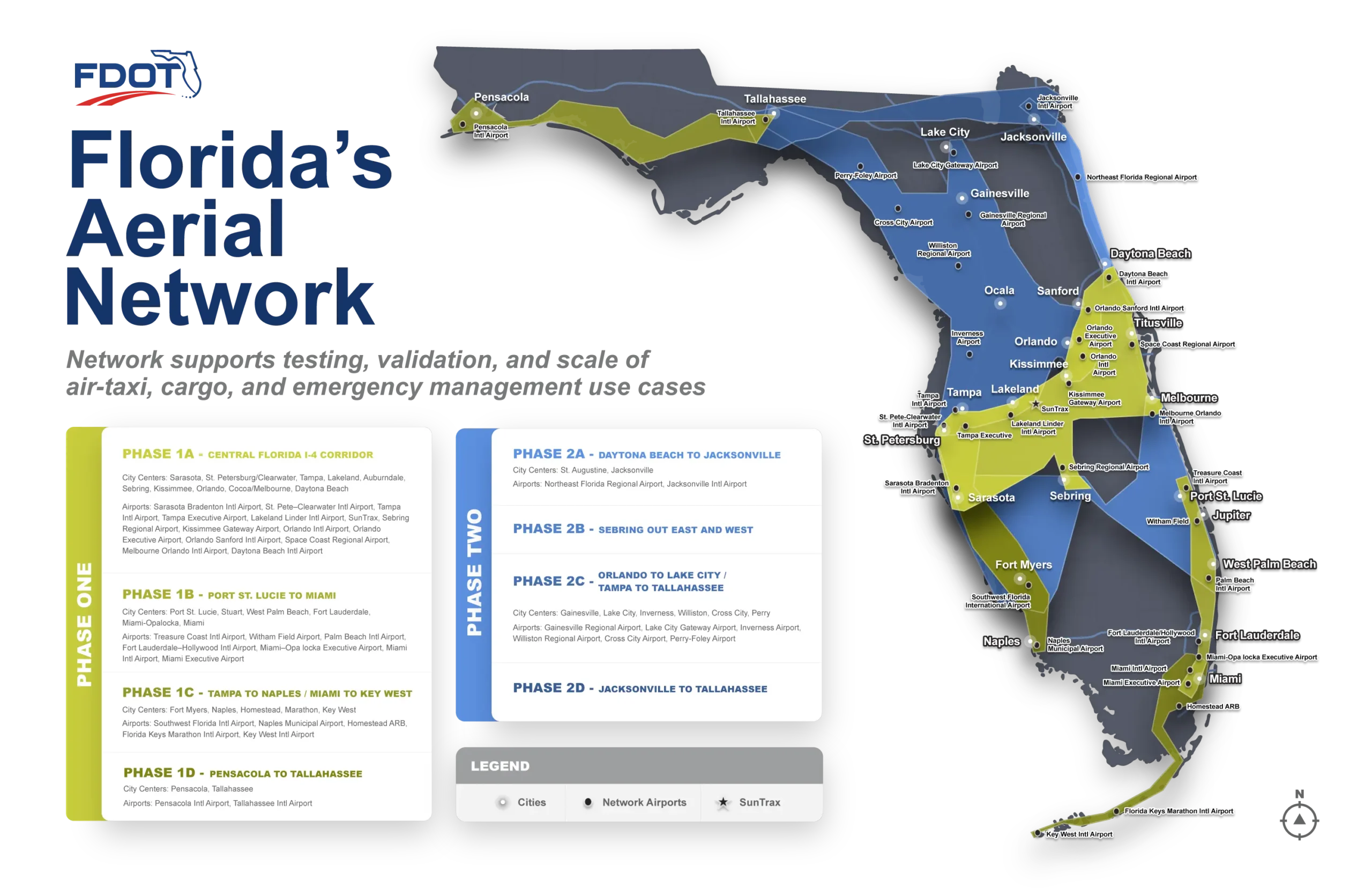
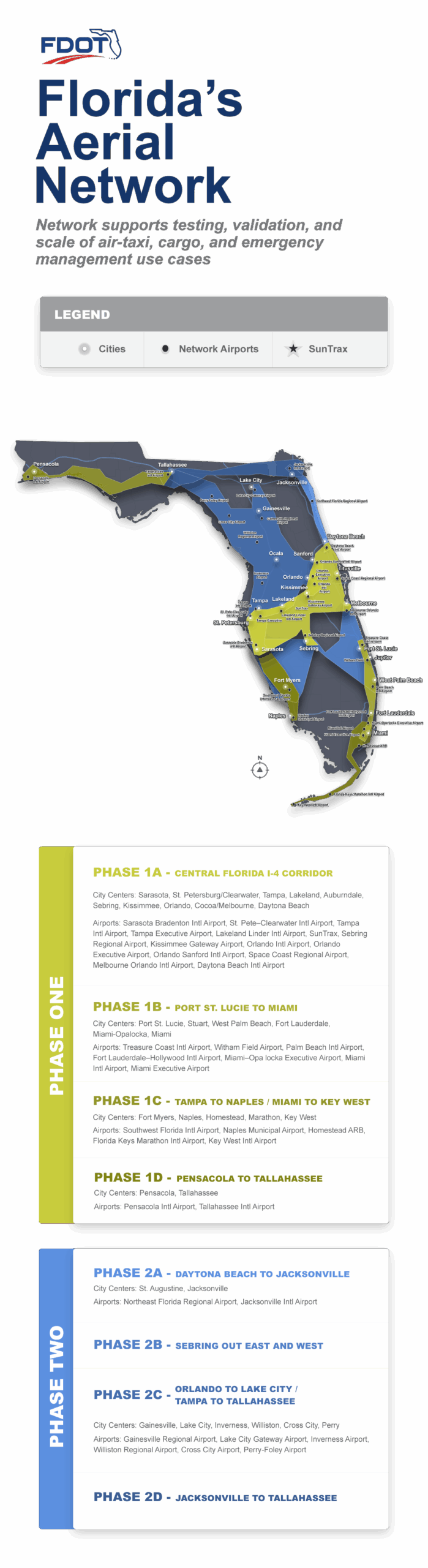
FDOT developed Florida’s Aerial Network as a comprehensive plan to guide the implementation of AAM across the state. This plan serves as a roadmap for creating a statewide aerial transportation network that complements existing ground infrastructure.

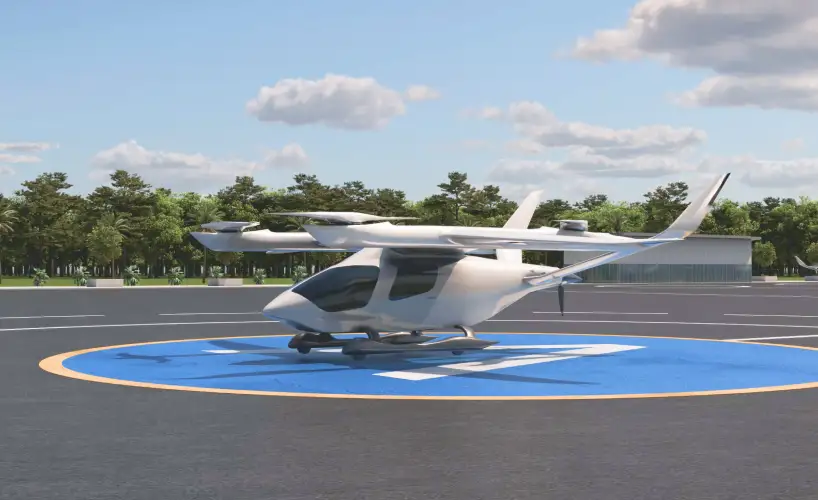
Florida’s Aerial Network will be supported by a network of vertiports, which are full-service facilities that provide passenger or cargo pickup, recharging, maintenance, hangar space, and will often provide a connection to different modes of travel. Much like the interstate highway system revolutionized travel in the 1950s by connecting cities and regions with efficient roadways, AAM offers the potential to create an entirely new network. Florida’s Aerial Network focuses on four focus areas:

Infrastructure
Identifies airspace corridors so that vertiports, charging stations, and other infrastructure can be strategically planned and integrated into AAM operations. Helps local and regional communities prepare for future needs and guides land-use decisions.
Safety

Establishes standards for aircraft certification, flight operations, and emergency procedures so that AAM services operate with clear protocols that protect passengers, operators, and communities.

Policy

Creates regulatory frameworks for airspace management, and community impacts. Helps communities understand how AAM services will operate, aims to minimize disruptions, and supports long‑term transportation goals.

Stakeholder Engagement

Coordinates roles and responsibilities so that AAM services are developed transparently, responsibly, and in ways that reflect community needs and priorities.

What is Intercity Travel

While Florida’s Aerial Network includes different types of AAM travel and use cases, FDOT is focused on intercity operations because these operations offer a powerful way to reduce travel times and strengthen connections between Florida’s rapidly growing communities. Intercity AAM has the potential to move people and goods quickly between cities that are currently separated by long, sometimes congested highway corridors.

Intercity Travel is a Catalyst for developing the AAM Market.

Speed to Market Implementation

FDOT’s commitment to building AAM infrastructure and vertiports are propelling the state to the forefront of the nation’s AAM revolution. Florida is on track to become the first state in the country to achieve profitable Advanced Air Mobility operations, setting a new benchmark for innovation and economic opportunity. With unmatched speed to market, a forward‑thinking approach, and a deep commitment to supporting this emerging industry, Florida is fully prepared to welcome AAM pioneers who are ready to help shape the next era of transportation in the Sunshine State.

Fall 2025

The first AAM Aerial Highway Network will be established, including the identification of profitable use cases and formation of binding partnerships to develop network stations.

Early 2026

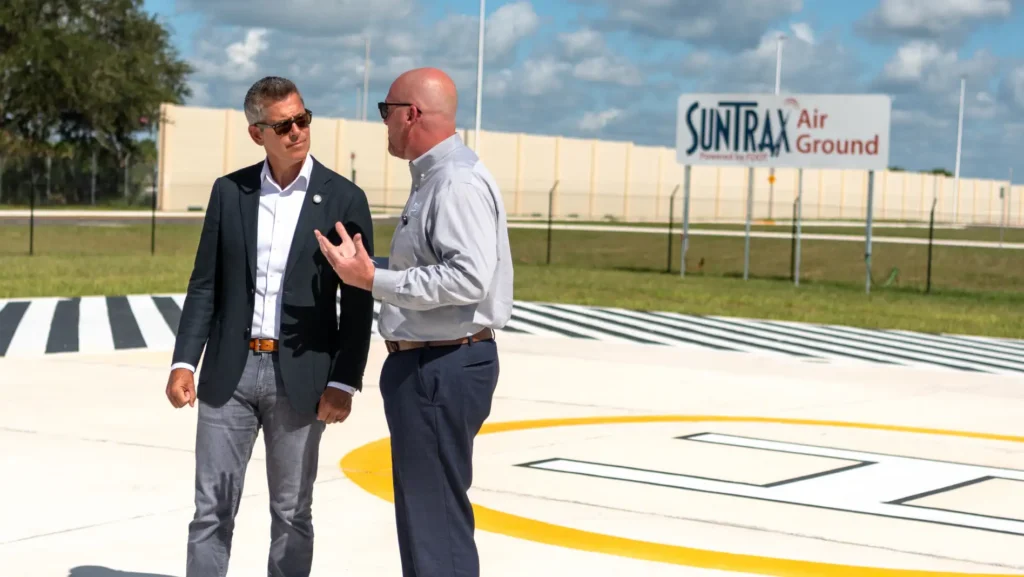
The new Florida AAM Headquarters at the SunTrax Campus will be operational, serving as a hub within the Aerial Highway Network.

Late 2026

AAM supporting infrastructure will be fully activated and ready to enable passenger travel.